
The Next Evolution of Managed IT: Why MSPs Are Building Their Own Software to Improve Service Delivery
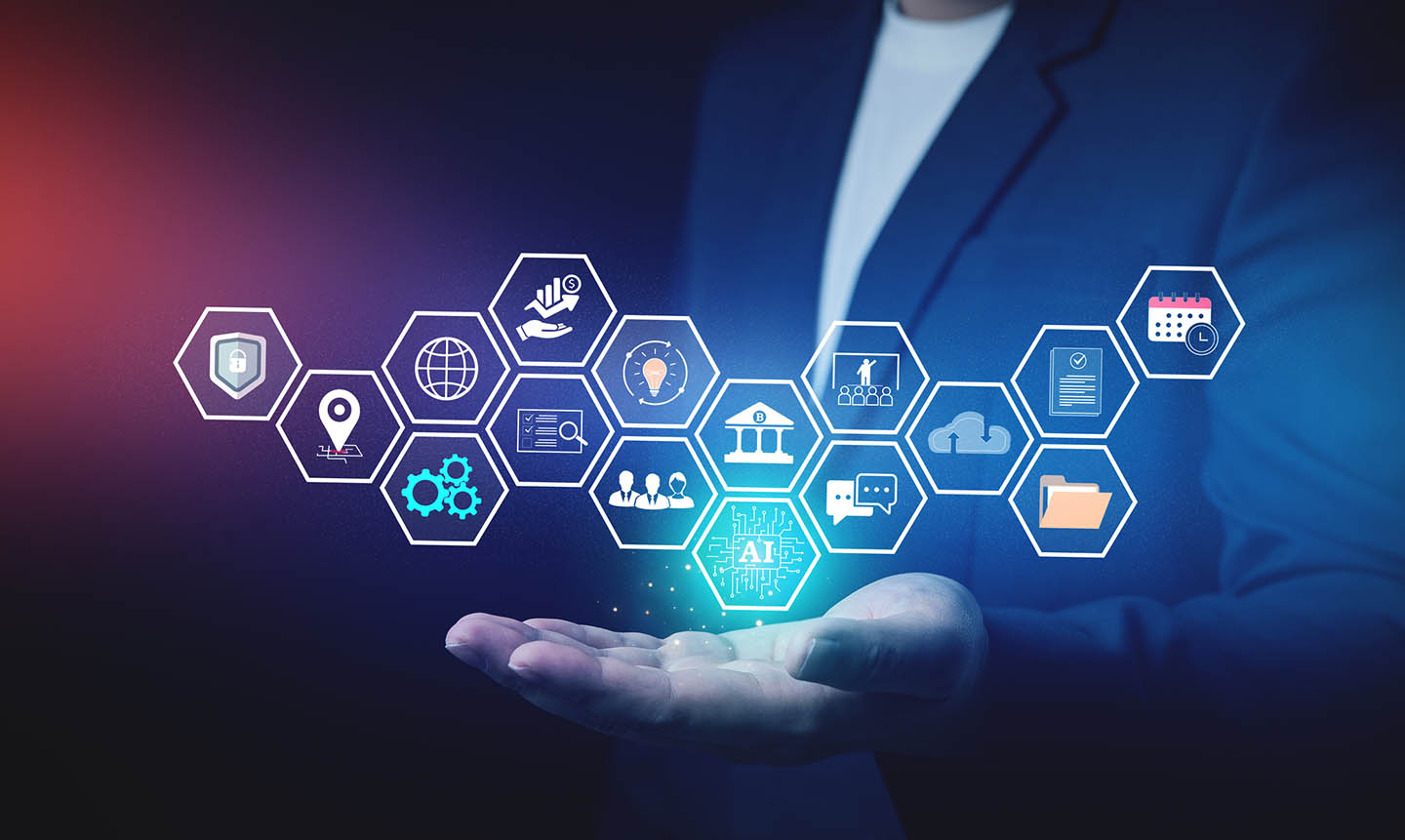
Managed Service Providers have spent decades adopting technology to better manage their clients. Remote monitoring platforms, ticketing systems, cybersecurity tools, documentation platforms and automation systems have all helped MSPs support increasingly complex IT environments.
But something interesting is beginning to happen.
Some MSPs are no longer relying exclusively on commercial software platforms to determine how their services are delivered. They are developing their own internal software, automation and AI capabilities to connect their systems, enforce standards and continuously measure whether services are being delivered the way they should be.
The objective isn't to replace technicians with AI.
It's to give technicians, service managers and leadership better information—and to make high-quality service delivery more consistent.
The Problem Isn't a Lack of Tools
Modern MSPs already have enormous amounts of technology.
A typical provider may have separate systems for ticketing, endpoint management, cybersecurity, backups, documentation, Microsoft 365, vulnerability management, billing, licensing and reporting.
Each platform may work very well independently.
The challenge is that service delivery happens across all of them.
A security standard might require information from an endpoint management platform, Microsoft 365, an EDR solution and an identity platform. Backup compliance may require checking multiple backup systems. Technician performance may require combining ticket activity, response times, documentation and other operational data.
When those systems remain isolated, people become the integration layer.
Technicians check dashboards. Managers review reports. Employees maintain spreadsheets. Someone notices that something hasn't been completed and follows up.
That approach works—but it becomes increasingly difficult to scale.
Sophos's 2026 MSP research highlights exactly this problem: MSPs are using tools and automation to provide increasingly sophisticated cybersecurity and compliance services, but fragmented platforms and remaining manual processes can limit their ability to deliver those services efficiently at scale.
From Managing Tools to Managing Outcomes
The next step is creating an intelligence layer above those systems.
Instead of asking:
“Is our monitoring software running?”
an MSP can ask:
“Are all devices we're responsible for being monitored?”
Instead of:
“Do we have an encryption product?”
the question becomes:
“Are all applicable client devices actually encrypted?”
Instead of simply knowing that backups ran:
“Did every system that should have been backed up successfully complete its backup, and has the result been verified?”
Those are fundamentally different questions.
The first set measures whether tools exist.
The second measures whether the service outcome was actually achieved.
Software Can Turn Standards Into Continuous Processes
This is where internally developed software can become particularly powerful.
An MSP can define its service standards in software and continuously compare actual client environments against those standards.
For example, a platform could automatically identify:
-
devices missing required security controls;
-
endpoints that haven't checked in recently;
-
systems approaching end-of-support;
-
machines without encryption;
-
failed or missing backups;
-
unresolved vulnerabilities;
-
stale service tickets;
-
incomplete documentation; and
-
inconsistencies between what a client is being billed for and what is actually deployed.
Instead of depending entirely on someone remembering to check each condition, the software continuously looks for exceptions.
The human team then focuses on resolving exceptions rather than searching for them.
That's an important distinction.
Automation shouldn't remove accountability. Properly designed, it can increase accountability.
AI Adds Another Layer
Traditional automation is excellent when the rule is known:
If X happens, do Y.
AI becomes valuable when the information is less structured.
An AI-enabled MSP platform can potentially analyze tickets, documentation, security findings and operational data together and help identify patterns that would otherwise be difficult to spot.
It might recognize that a recurring ticket isn't actually five separate problems but one underlying issue.
It can help identify documentation gaps.
It can summarize an organization's current IT condition for an engineer preparing for a client meeting.
It can help management identify unusual service patterns or areas requiring attention.
And increasingly, AI can allow employees to interact with operational data using natural language rather than navigating multiple systems and reports.
The important point is that AI should not simply generate answers. It should be connected to reliable operational data and surrounded by appropriate controls and human oversight.
Compliance Is Becoming Continuous
This same approach has major implications for cybersecurity and compliance.
Historically, compliance was often treated as a periodic exercise: collect information, conduct an assessment, create a report and remediate the findings.
Technology is making it possible to move closer to continuous compliance.
Controls can be checked repeatedly rather than annually.
Evidence can be collected automatically.
Exceptions can be identified as they occur.
MSPAlliance, for example, has been developing ways to map audited controls directly to managed services so providers can produce clearer, client-facing views of how service delivery aligns with compliance requirements.
That represents an important change in thinking.
Compliance becomes less about proving what happened months ago and more about continuously verifying what is happening now.
Building an Internal System of Accountability
At Integrated Computer Services, this thinking led us to develop our own internal intelligence and automation platform.
Our platform's sole intended purposew it not to replace the specialized platforms our engineers use.
Instead, it brings information from different parts of our service operation together so that we can better measure, automate and improve how services are delivered.
The long-term objective is straightforward:
If ICS says something is part of our managed service, we want systems helping us continuously verify that we're actually delivering it.
That includes areas such as cybersecurity standards, endpoint health, backups, documentation, ticket performance and other operational requirements.
We're also incorporating AI where it provides practical value—helping our team interpret information, identify exceptions and find important information more quickly.
For us, the goal isn't AI for the sake of saying we use AI.
It's using software and AI to make our people more consistent, informed and accountable.
Better Automation Should Create Better Human Service
There's a misconception that automation makes managed IT less personal.
We believe the opposite can happen.
Every hour an engineer spends manually reconciling spreadsheets, checking repetitive dashboards or searching multiple systems is an hour that isn't being spent solving problems, improving infrastructure or talking with clients.
Good automation removes administrative friction.
It allows experienced technical professionals to spend more of their time doing work that actually requires experience, judgment and creativity.
That can translate into faster identification of problems, more consistent standards, better documentation and ultimately a better client experience.
The MSP of the Future Will Be Part Service Company, Part Software Company
Commercial PSA, RMM, cybersecurity and management platforms aren't going away. They're essential components of modern managed IT.
But increasingly sophisticated MSPs are beginning to build technology around and between those platforms.
The competitive advantage may no longer simply be which tools an MSP purchases.
It may be how intelligently the MSP connects those tools, what processes it automates, what standards it measures and how quickly it can turn all of that information into action.
The MSP industry has spent years automating technology.
The next stage is automating service quality itself.
And ultimately, that is what clients should care about most: not how many tools their IT provider owns, but whether technology is being used to consistently deliver a more secure, reliable and well-managed IT environment.



Why Choose Us?
- Microsoft Certified Cloud AI Partner
- SOC II Certified Managed Service Provider
- Google 5 Star Rated Business
- 24/7 US Based Technical Team
- Better Business Bureau A+ Rated

About Us:
- 200+ 5-Star Google Rated IT Firm
- Microsoft Certified Cloud AI Partner
- SOC II Certified Managed Service ProviderSOC II Certified MSP
- Better Business Bureau A+ Rated
